Introduction
Cricket commercialisation has catapulted the Indian Premier League (IPL) as a sports competition and transformed it into one of the world’s most successful sports businesses. IPL — a global sporting phenomenon that brought the best cricketers, corporate sponsorship, major broadcasters and also millions of fans worldwide since its inception in 2008. With a franchise-based structure analogous to the largest professional sports leagues across the world, it is owned and run by the Board of Control for Cricket in India (BCCI). Today, IPL is more than the richest cricket tournament; it’s one of the biggest sporting properties in the world.
The IPL can be assessed by its ever-increasing brand value, franchise valuations, media rights deals, sponsorship agreements and fan engagement. From an 8-team tournament, it has now turned into a multi-billion-dollar entity that earns thousands of crores every year. While creating huge wealth for franchise owners, sponsors, broadcasters and players of essentially the league has contributed immensely to the financial sustainability of Indian cricket.
IPL Overview
| Category | Details |
| League Name | Indian Premier League (IPL) |
| Founded | 2008 |
| Governing Body | BCCI |
| Format | Twenty20 Franchise Cricket |
| Number of Teams (2026) | 10 |
| Estimated IPL Enterprise Value | More than ₹1.5 lakh crore |
| Global Standing | The Richest Cricket League in the World |
| Main Revenue Sources | Media Rights, Sponsorships, Ticket Sales, Merchandise |
| Media Rights Cycle | 2023–2027 |
| Media Rights Value | More than ₹48,000 crore |
| Average Team Auction Purse | ₹120–130 crore |
| Season Duration | March–May |
| Current Teams | 10 Franchises |
| Major Markets | India and Global Cricket Audience |
History of IPL
After India’s success at the 2007 ICC T20 World Cup, the Indian Premier League (IPL) was founded in 2008. The BCCI conceived a league that would mix foreign stars and home-grown talent into a successful commercial sporting product.
The first season had eight teams, namely:
- Mumbai Indians
- Chennai Super Kings
- Royal Challengers Bengaluru
- Kolkata Knight Riders
- Rajasthan Royals
- Delhi Daredevils (now Delhi Capitals)
- Kings XI Punjab (now known as Punjab Kings)
- Deccan Chargers
The league continued to grow, and additional franchises were added during this time as it expanded to ten teams by 2022.
How IPL Earns Money
Broadcasting Rights
The biggest source of IPL income is the broadcasting rights.
Television networks and digital streaming platforms are willing to shell out huge amounts to acquire exclusive broadcasting rights because every season, IPL garners hundreds of millions of viewers.
With the 2023–2027 media rights cycle value going well above ₹48,000 crore, IPL is now amongst the most valuable sports products in the world.
Sponsorship Revenue
The IPL signs title sponsorship agreements with major brands.
Over the years, sponsors have included:
- DLF
- Pepsi
- Vivo
- Dream11
- Tata Group
Apart from title sponsorship, the league earns revenue from:
- Official partners
- Strategic timeout sponsors
- Umpire sponsors
- Digital sponsors
- Fantasy sports partnerships
Ticket Sales
At home games, each franchise makes money through the sale of tickets.
The IPL teams have ticket sales among some of their key revenue sources. For franchises, the revenues that they make are from selling general admission tickets, premium seating areas, corporate boxes and even VIP hospitality areas. Stadiums generally sell out quickly during matches involving very popular teams like MI, CSK and RCB. Ticket prices can range from a couple of hundred rupees in some stadiums and for lesser matches to several thousand rupees per seat. This matchday revenue is a crucial part of a team’s overall revenue each year.
Revenue comes from:
- General tickets
- Premium seating
- Corporate boxes
- Hospitality packages
- VIP experiences
If the teams are big enough, then stadiums regularly sell out, providing large match-day revenue.
Merchandise Sales
IPL teams sell:
- Official jerseys
- Caps
- T-shirts
- Flags
- Accessories
Teams with large fan bases, such as the Mumbai Indians, Chennai Super Kings, Royal Challengers Bengaluru, and Kolkata Knight Riders, generate significant merchandise revenue.
Digital Revenue
The league earns from:
- Social media partnerships
- YouTube content
- Mobile applications
- Digital advertising
- Fan engagement platforms
Digital growth has become a major contributor to IPL’s overall valuation.
How IPL Teams Earn Money
While the IPL teams function more as commercial sports companies and have various revenue channels during the year. The majority of this income comes from the central revenue share allocated by the BCCI through broadcasting rights and league sponsorship contracts. Each franchise also signs individual sponsorship agreements — jersey sponsors, sleeve sponsors, headgear sponsors and official partners — which mark a significant part of overall annual earnings. Income is also bolstered by match-day revenue from ticket sales, corporate hospitality boxes and premium seating. Teams also make money through merchandise sales such as jerseys, caps and other fan industry products. For years now, the importance of digital revenue from social media partnerships, content creation, fan engagement platforms and licensing deals has grown. These multiple revenue streams, especially combined with the franchise fee and lucrative global media rights, allow successful franchises with large fan bases to generate hundreds of crores of rupees every season, making IPL teams among the most valuable sports properties in the world.
Central Revenue Distribution
The BCCI distributes a significant share of broadcasting and sponsorship revenue among franchises.
This provides teams with a stable annual income regardless of on-field performance.
Team Sponsorships
Every franchise signs independent sponsorship agreements.
Common sponsorship categories include:
- Jersey front sponsor
- Sleeve sponsor
- Helmet sponsor
- Official partner
- Digital partner
Top franchises can earn hundreds of crores annually through sponsorship deals.
Match-Day Revenue
Teams receive revenue from:
- Ticket sales
- Hospitality suites
- Food and beverage sales
- Corporate partnerships
Merchandise Revenue
Successful franchises have built strong brands that generate revenue through merchandise sales across India and internationally.
How IPL Teams Spend Money
Player Salaries
The largest expense for most teams is player salaries.
Each franchise receives a fixed auction purse every season.
In recent seasons, the purse has been approximately ₹120–130 crore.
Coaching Staff
Teams spend heavily on:
- Head coaches
- Batting coaches
- Bowling coaches
- Fielding coaches
- Analysts
Travel and Accommodation
IPL teams travel extensively throughout India and spend significant amounts on:
- Chartered flights
- Luxury hotels
- Logistics
Marketing and Promotions
Franchises invest heavily in:
- Advertising campaigns
- Social media promotion
- Fan engagement activities
IPL Team Valuations (2008 vs 2026)
| Team | Original Cost (2008/Launch) | Estimated Value in 2026 | Growth Multiple |
| Mumbai Indians (MI) | ₹447 Crore | ₹15,000–18,000 Crore | 34x–40x |
| Chennai Super Kings (CSK) | ₹364 Crore | ₹14,000–17,000 Crore | 38x–47x |
| Royal Challengers Bengaluru (RCB) | ₹464 Crore | ₹16,700 Crore | 36x |
| Kolkata Knight Riders (KKR) | ₹300 Crore | ₹14,000–16,000 Crore | 47x–53x |
| Delhi Capitals (DC) | ₹336 Crore | ₹8,000–10,000 Crore | 24x–30x |
| Rajasthan Royals (RR) | ₹268 Crore | ₹15,600 Crore | 58x |
| Punjab Kings (PBKS) | ₹304 Crore | ₹7,000–9,000 Crore | 23x–30x |
| Sunrisers Hyderabad* | ₹425 Crore (2012) | ₹8,000–10,000 Crore | 19x–24x |
| Gujarat Titans (GT) | ₹5,625 Crore (2022) | ₹7,500–8,500 Crore | 1.3x–1.5x |
| Lucknow Super Giants (LSG) | ₹7,090 Crore (2022) | ₹8,000–10,000 Crore | 1.1x–1.4x |
Sunrisers Hyderabad entered the IPL in 2013 after replacing Deccan Chargers
Also Read: Dharamshala Cricket Stadium | Punjab Kings vs Delhi Capitals Timeline
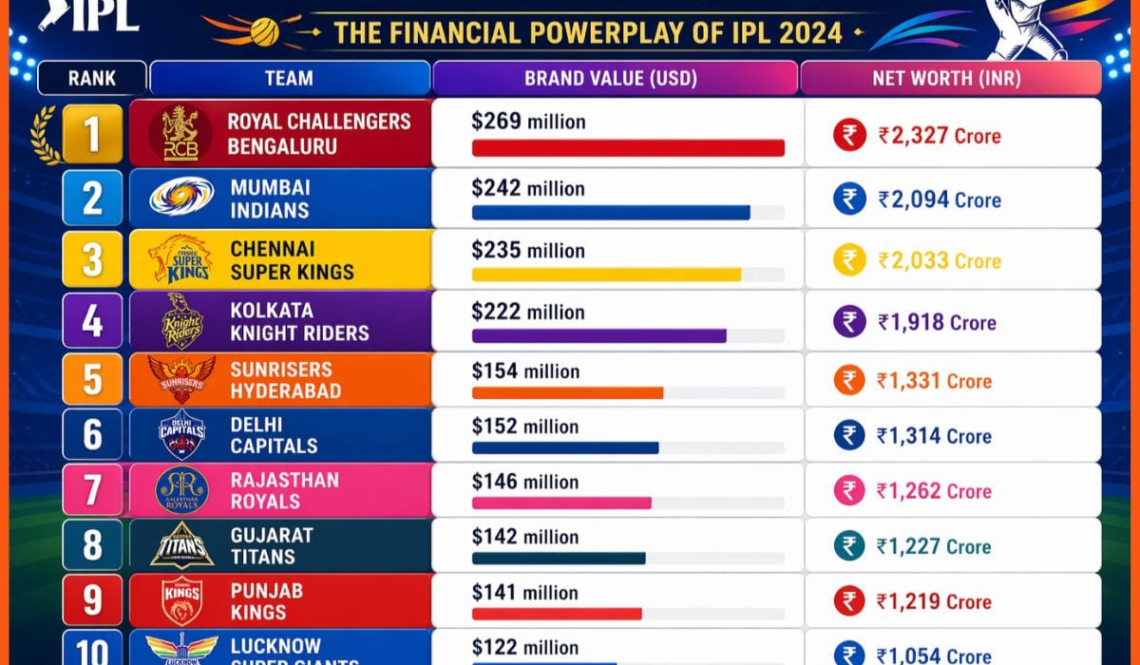
Most Valuable IPL Franchises
Mumbai Indians
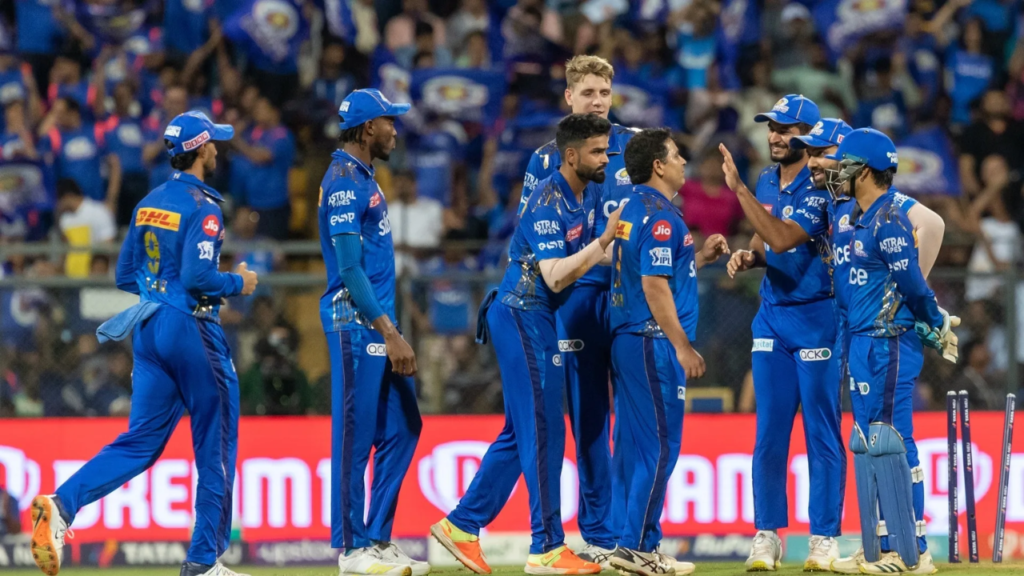
The Mumbai Indians were purchased by Reliance Industries, and with their extensive strength in branding, combined with winning quite a few IPL titles, they are amongst the best franchises in terms of dollar valuation.
Chennai Super Kings
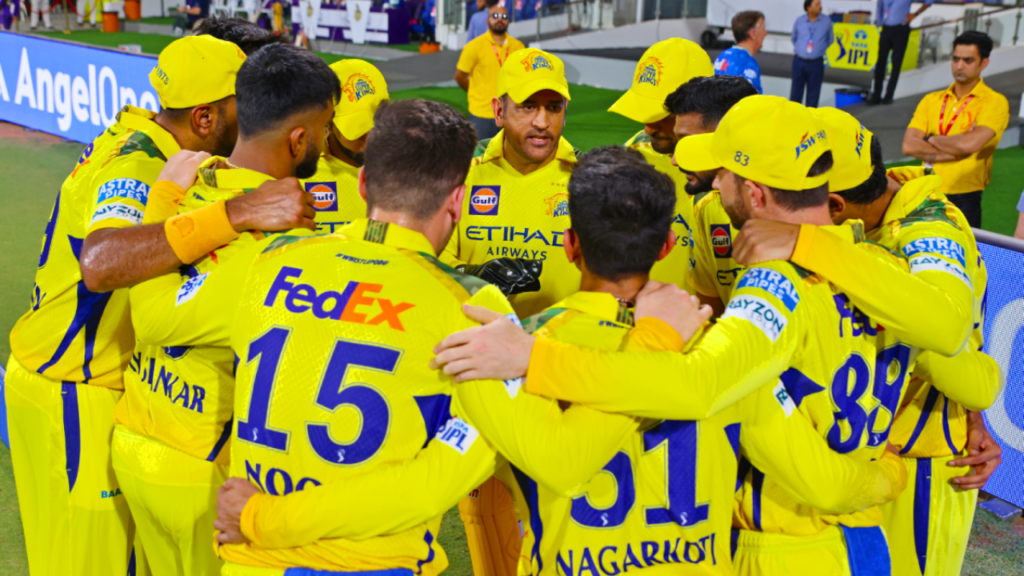
The Chennai Super Kings have formed one of the most loyal fan bases in cricket, and every year are consistently among India’s most valuable sports franchises.
Royal Challengers Bengaluru
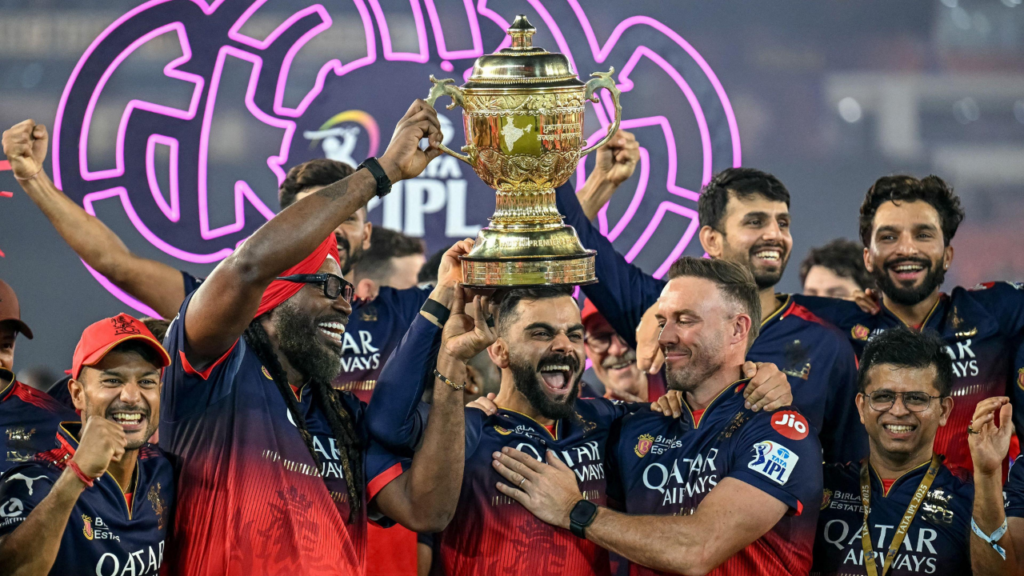
RCB remains one of the biggest teams in a financial sense because they have fans who will always love them and players like Faf, Virat, etc.
Kolkata Knight Riders
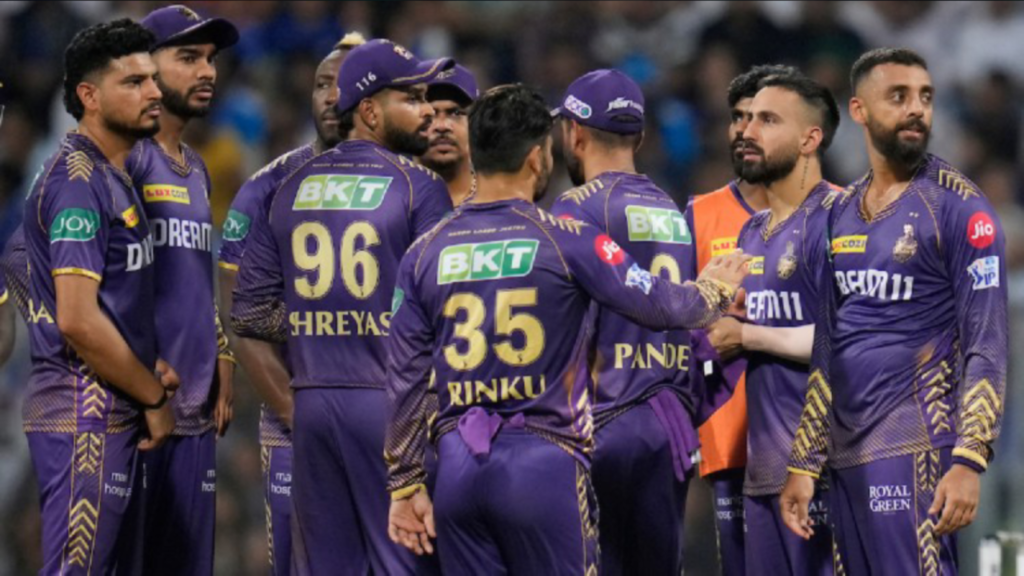
KKR appears to be the hidden gem of a sports franchise built by way of strong ownership and marketing.
IPL Prize Money
The IPL prize money is given to teams according to their final standings in the tournament. The overall winner gets ₹20 crore, and the runner-up receives ₹13 crore. IPL is one of the richest cricket leagues in the world, in addition to regular match rewards for playoffs, individual races and special awards.
Recent Prize Structure
| Position | Prize Money |
| Winner | ₹20 crore |
| Runner-up | ₹13 crore |
| Qualifier Losers | ₹7 crore each |
| Orange Cap Winner | ₹20 lakh |
| Purple Cap Winner | ₹20 lakh |
| Emerging Player | ₹20 lakh |
| Most Valuable Player | ₹20 lakh |
The exact amount may vary slightly depending on the season and BCCI decisions.
Why Sponsors Invest in IPL
Companies invest in IPL because it provides:
- Massive television reach
- Strong digital engagement
- National brand exposure
- Association with star players
- Access to millions of consumers
Brands from sectors such as:
- Banking
- Technology
- Automobile
- Telecom
- E-commerce
- Fantasy Sports
- Consumer Goods
regularly compete for sponsorship opportunities.
IPL’s Impact on Indian Cricket
The other impact, from an IPL perspective, has financially empowered Indian cricket incredibly. The revenue from the tournament provides support for:
- Domestic cricket development
- Stadium infrastructure
- Player development programs
- Women’s cricket initiatives
- State cricket associations
The league has also given younger players the opportunities to share dressing rooms with International stars and learn from their experience.
Conclusion
These days, the Indian Premier League has morphed from a new T20 tournament in 2008 into a globetrotting sporting juggernaut which is perceived as being worth upwards of ₹1.5 lakh crore. The wonderful success is predicated on world-class cricket, strong franchise possession, and giant sponsorship – two fields starting with an enormous fan following. It either brings sole investments from broadcasting rights, sponsorships, ticket sales, merchandise and digital platforms, as well as franchises through central revenue sharing and commercial partnerships. As franchise valuations continue to soar year-on-year and new revenue streams are found, it’s unlikely the IPL will cede its crown as the world’s most valuable cricket league in the near future.
FAQs on IPL Net Worth:
1. What is the net worth of the Indian Premier League (IPL)?
The IPL is valued at over $10–12 billion, making it one of the richest cricket leagues in the world.
2. How has IPL’s net worth grown since 2008?
Since its launch in 2008, the IPL has grown rapidly due to broadcasting rights, sponsorships, and global popularity, increasing its value multi-fold every few years.
3. What are the main sources of IPL revenue?
IPL earns money from media rights, team sponsorships, title sponsorships, ticket sales, and brand partnerships.
4. Which IPL teams have the highest net worth?
Teams like the Mumbai Indians, Chennai Super Kings, and the Royal Challengers Bengaluru are among the most valuable franchises in the league.
5. Why is the IPL considered so valuable globally?
The IPL combines massive TV audiences, star international players, and strong brand marketing, making it a global sports business powerhouse run by the Indian Premier League.
Read More: Royal Challengers Bengaluru (RCB) Net Worth 2026 | Highest Score in Narendra Modi Stadium